The menu card was not at my table.
I had to go and take one from another table. And once I had it, I still could not see what any of the drinks actually look like. I want to see a drink before I buy it. Seeing it is what makes me order it.
One sticker on the corner of the table. The guest taps or scans, gets the WiFi, reads the menu with photographs, and orders from where they are sitting.

Three things happened to me as a customer. None of them are complaints. All three have the same fix.
I had to go and take one from another table. And once I had it, I still could not see what any of the drinks actually look like. I want to see a drink before I buy it. Seeing it is what makes me order it.
Every seat has power for a laptop, which people notice and appreciate. But there is no WiFi name or password anywhere. I asked at the counter and your team had to go looking for it.
A QR with an NFC tag in it, stuck on the corner of every table. Tap a phone on it or scan it. Number, code, online. The menu opens with photographs, and they order without moving.
Tap or scan. The sticker already knows which table it is on, so the order arrives at the counter with the table number on it.
The NFC tag means most guests never open a camera. They rest the phone on the sticker and the page opens by itself. The QR printed on the same sticker covers every other phone.
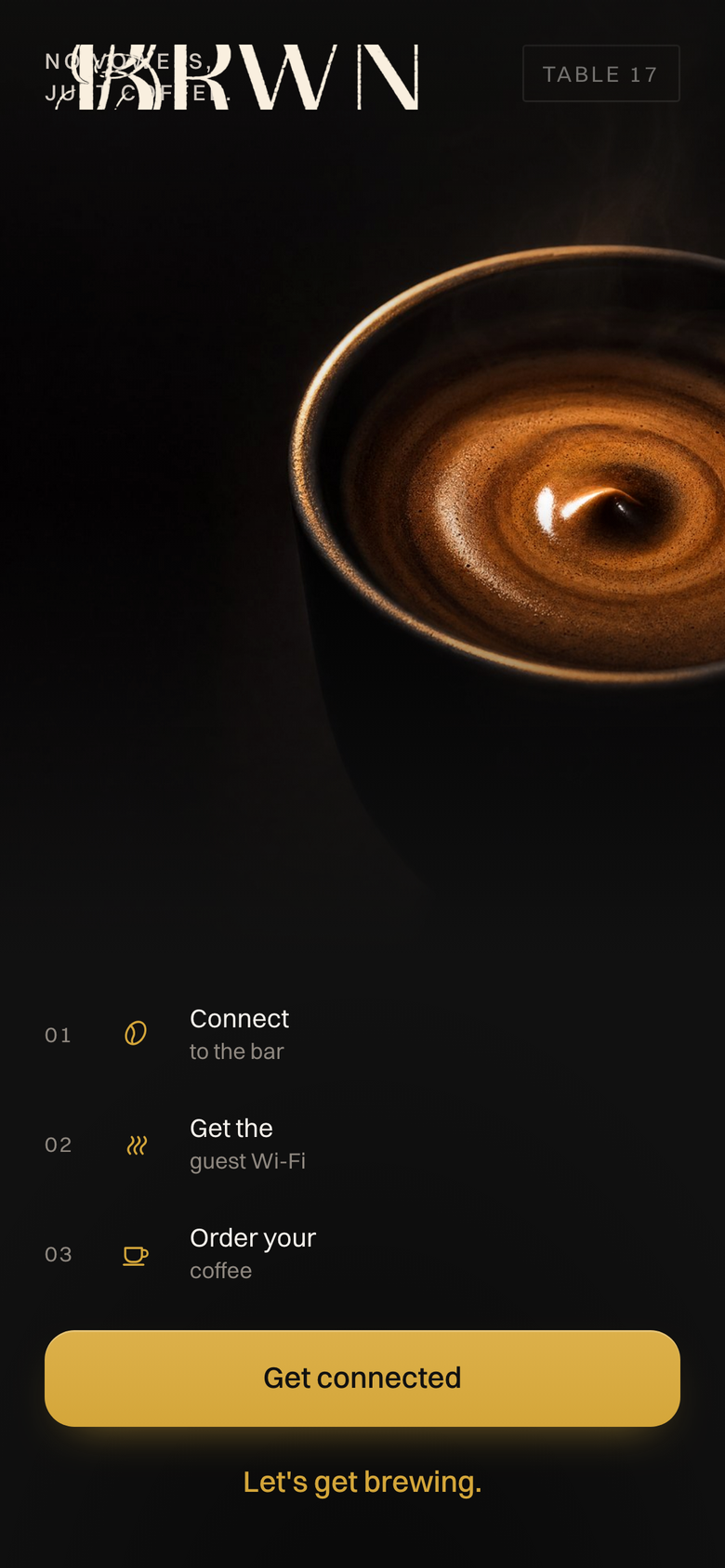
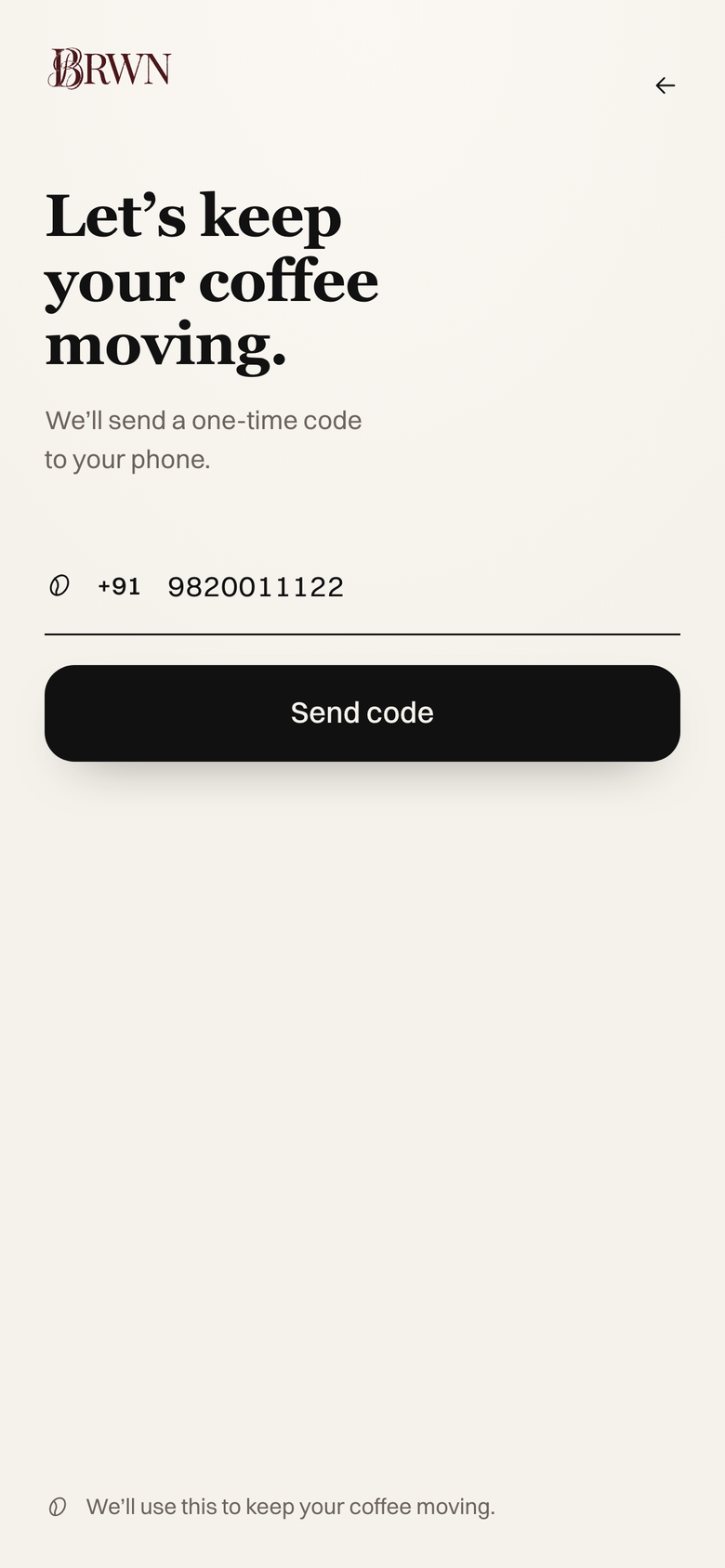
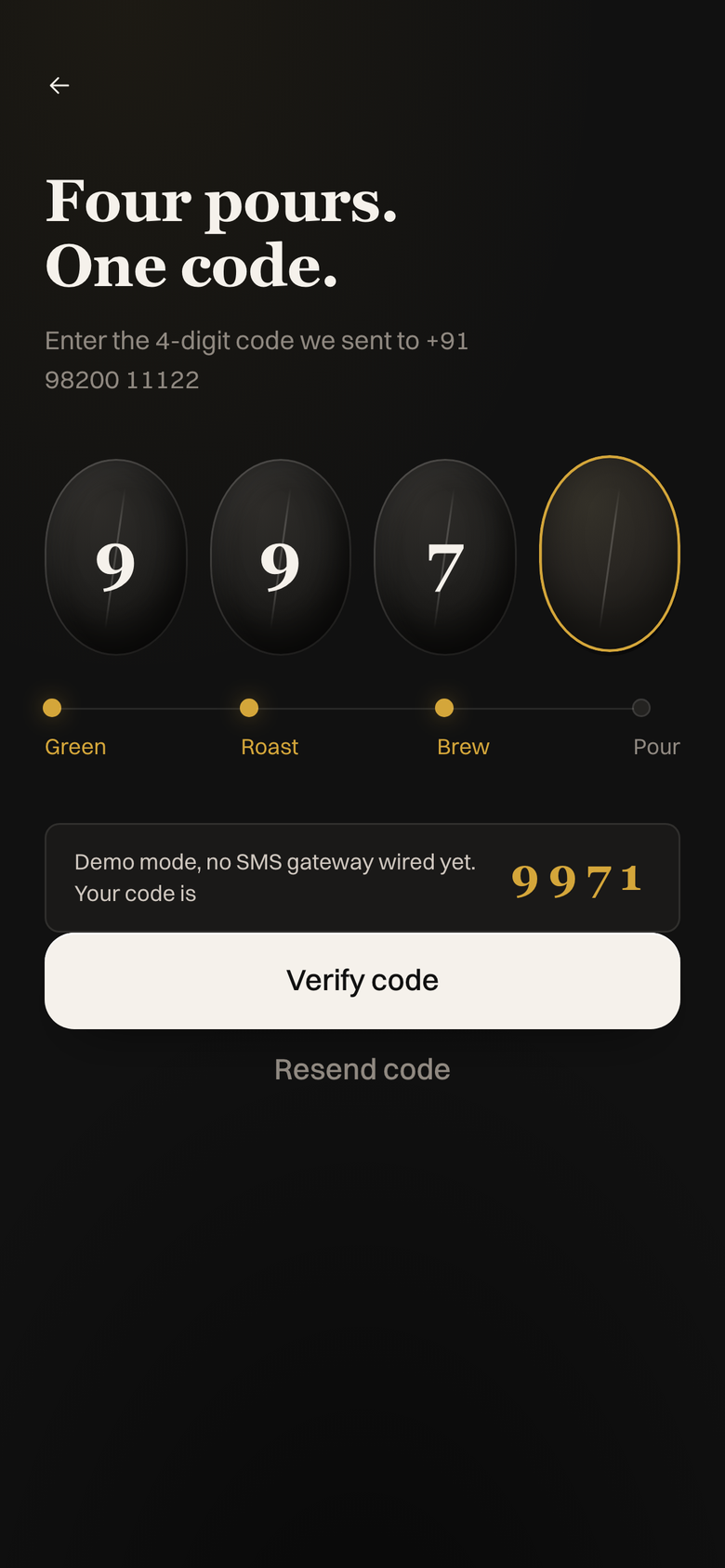
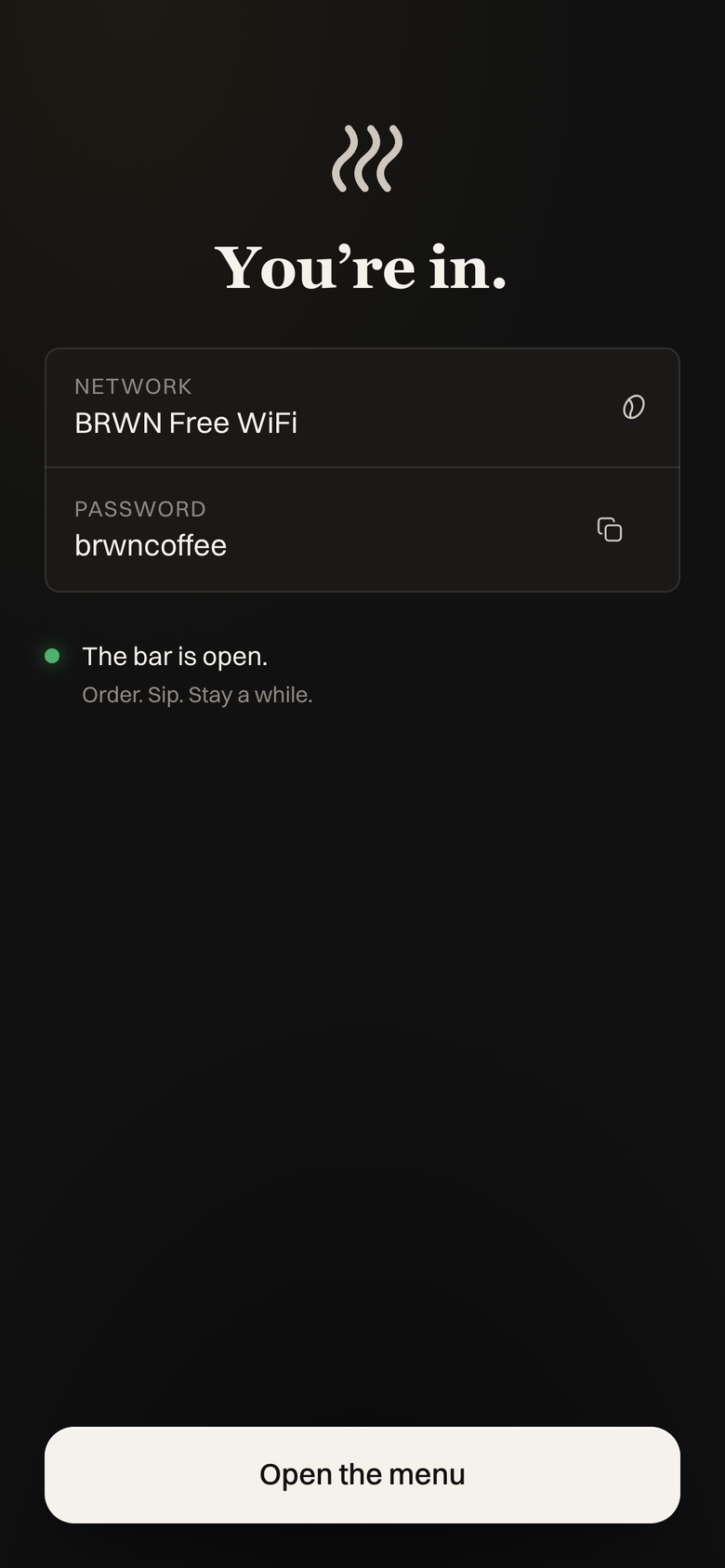
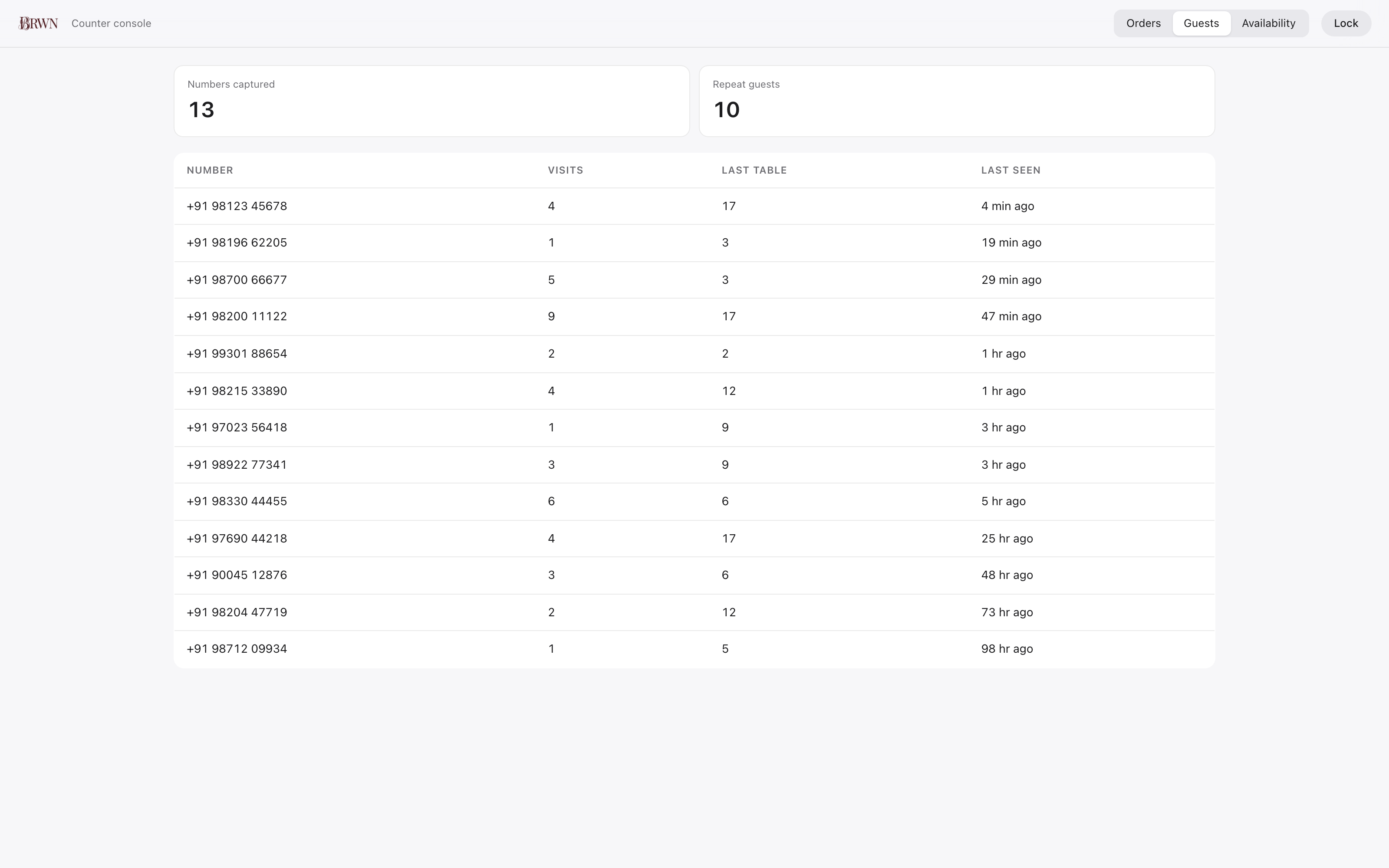
They give you the number because they want the WiFi. You are not asking for it, you are trading it.
Every person who connects is saved with their number, how many times they have visited, and which table they sat at. That is a real, opted-in list of people who have actually been inside BRWN, built without anyone at the counter typing a thing.
Use it for a WhatsApp campaign when a new roast lands, for a slow Tuesday, for anything. This is the asset most cafes never collect.
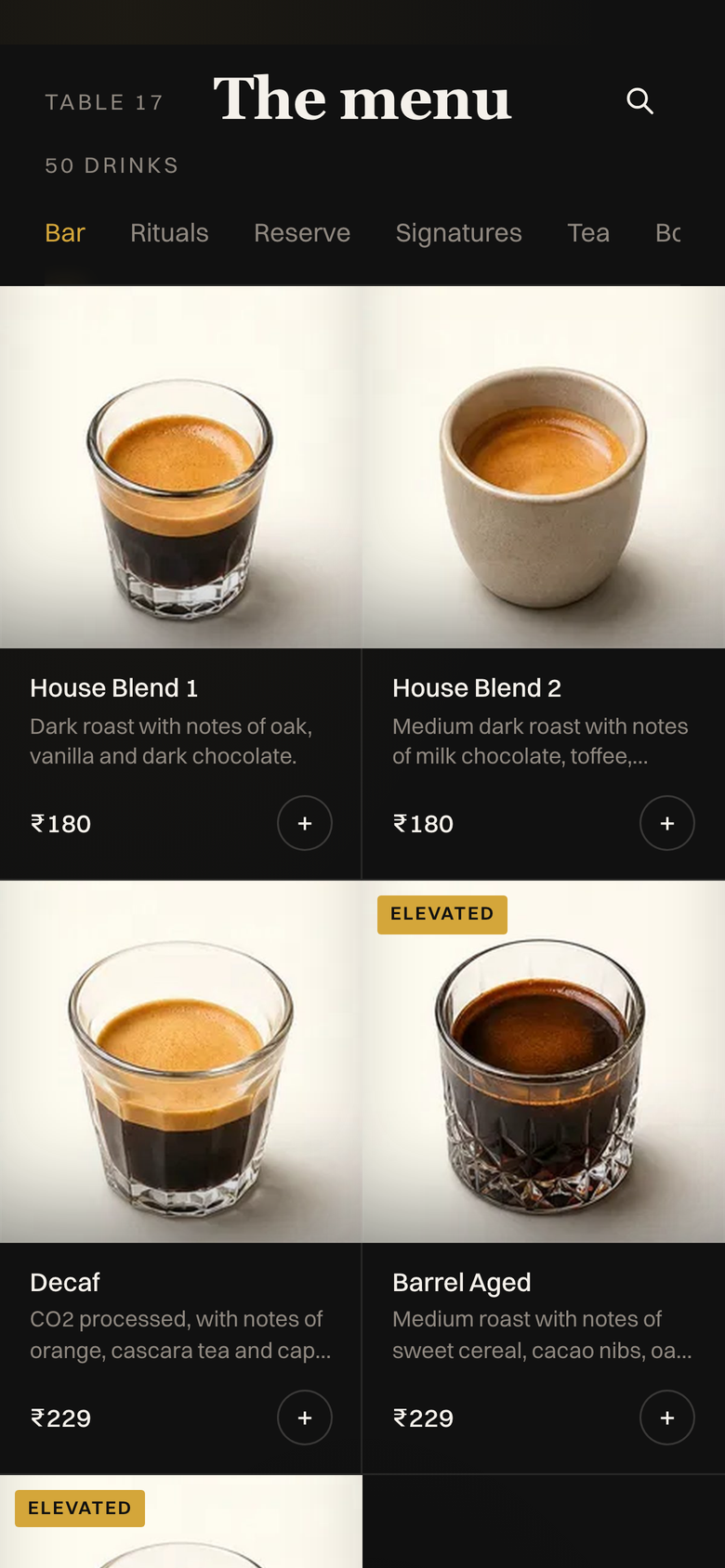
A card with names and prices asks the guest to imagine the drink. A photograph sells it.
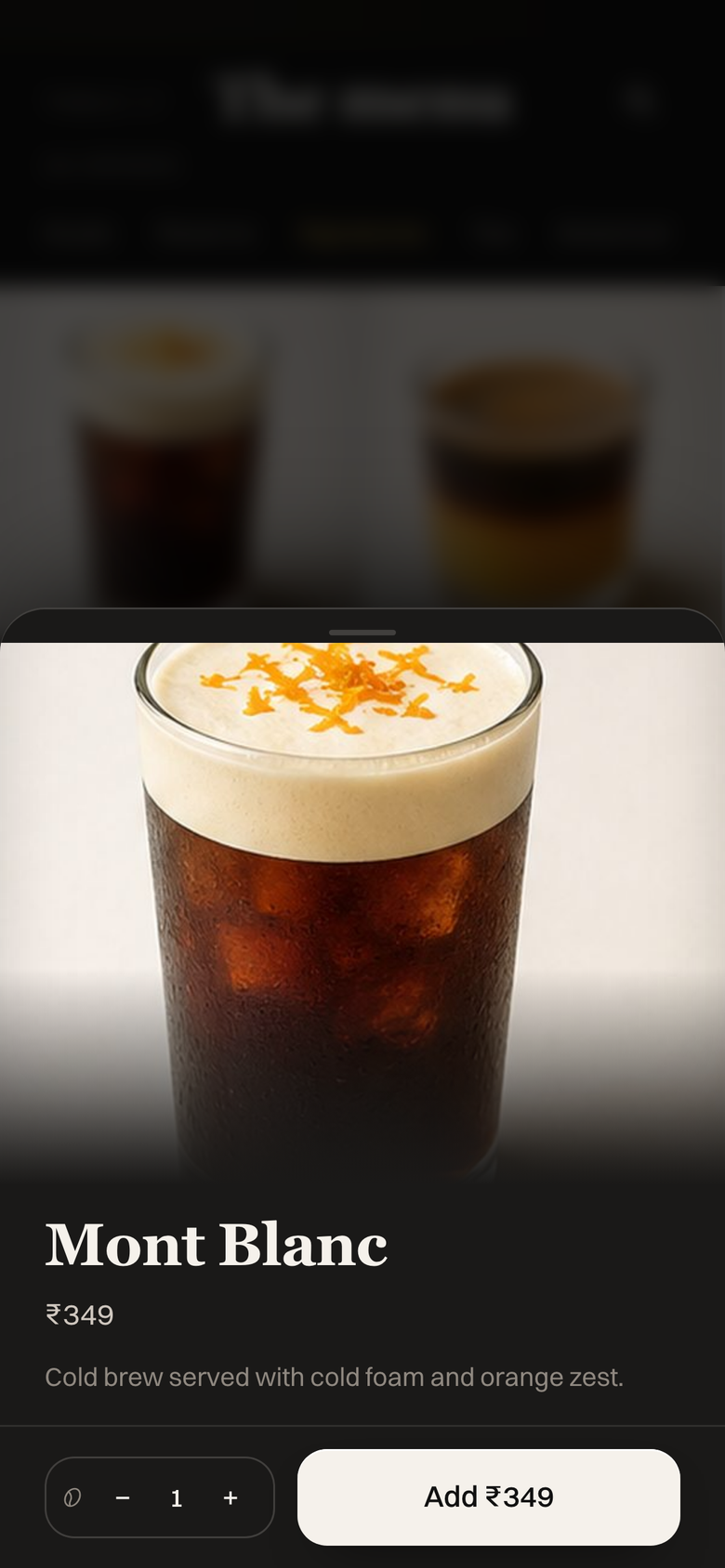
All 50 drinks from your card, every one with a photograph, a tasting line and a price. Signatures carry an Elevated tag. Anything you run out of goes grey with one toggle at the counter, and it greys out on every phone in the room within seconds.
No printing, no laminating, no card that has walked to another table. When a price changes you change it once.
No Razorpay. No payment gateway at all. The money goes from your guest straight into your bank account.
There is a reason cafes normally cannot do this. Here is the problem, and here is how we solve it.
If four tables all pay you ₹349 by UPI in the same ten minutes, your phone shows four identical alerts. You cannot tell which payment belongs to which order. That confusion is the entire reason people pay a gateway.
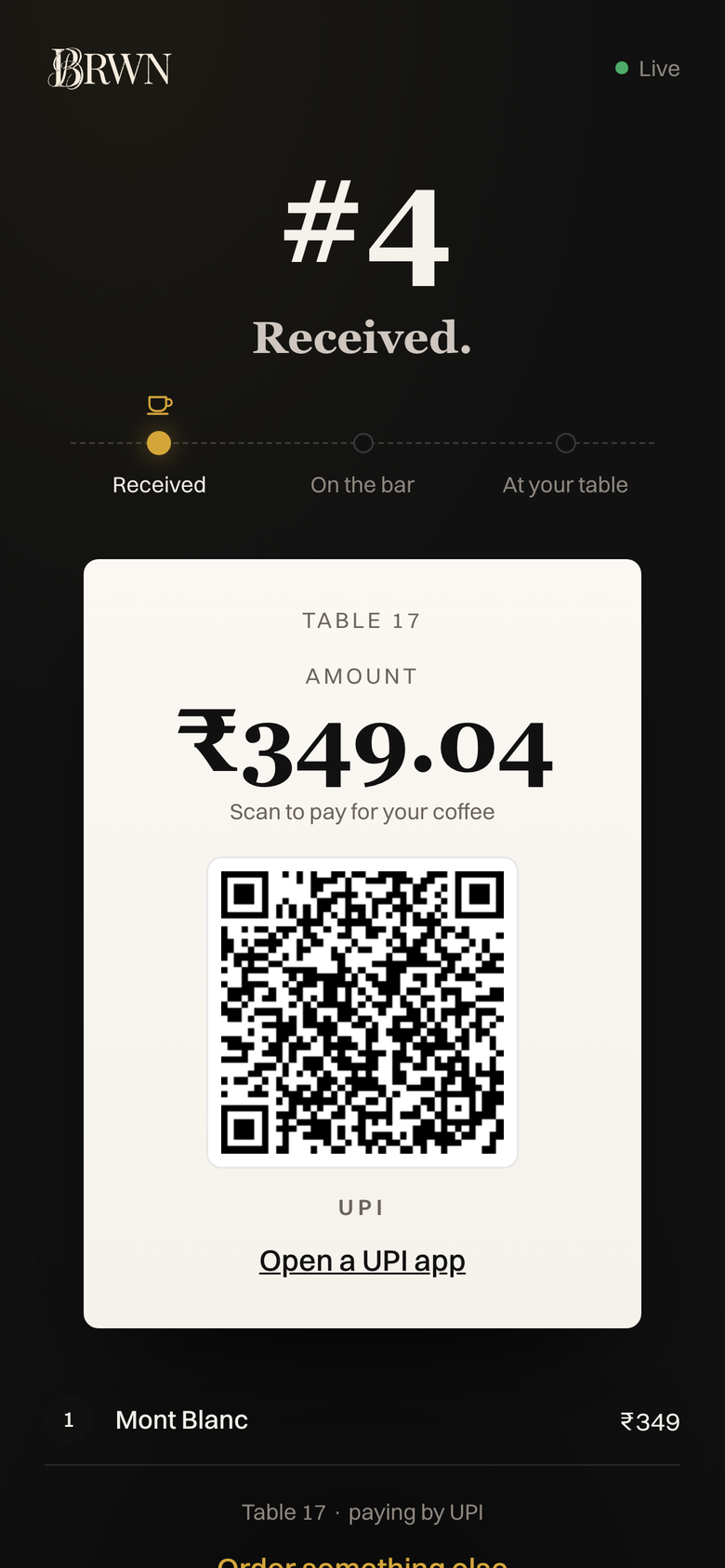
Every order is given its own unique paise. Order 04 is not ₹349.00, it is ₹349.04. Order 28 is ₹888.28. No two open orders ever ask for the same amount, so the moment the money lands the counter knows exactly whose it is.
The guest never thinks about it. They scan, their app is pre-filled with the exact amount, they press pay. Nothing to type, nothing to get wrong.
Nobody is forced online. The counter stays exactly as it is for anyone who prefers it.
Two buttons on the order screen. Pay at the counter sends the order to the bar straight away and they settle on the way out, exactly like today. Pay now by UPI shows the QR with the exact amount and the money reaches you before the drink is made.
The bill lives in the app. Every line, every add on, the total and the payment status, on their phone the moment they order and still there after they leave. No printed slip unless someone asks for one, and no thermal roll to reorder.
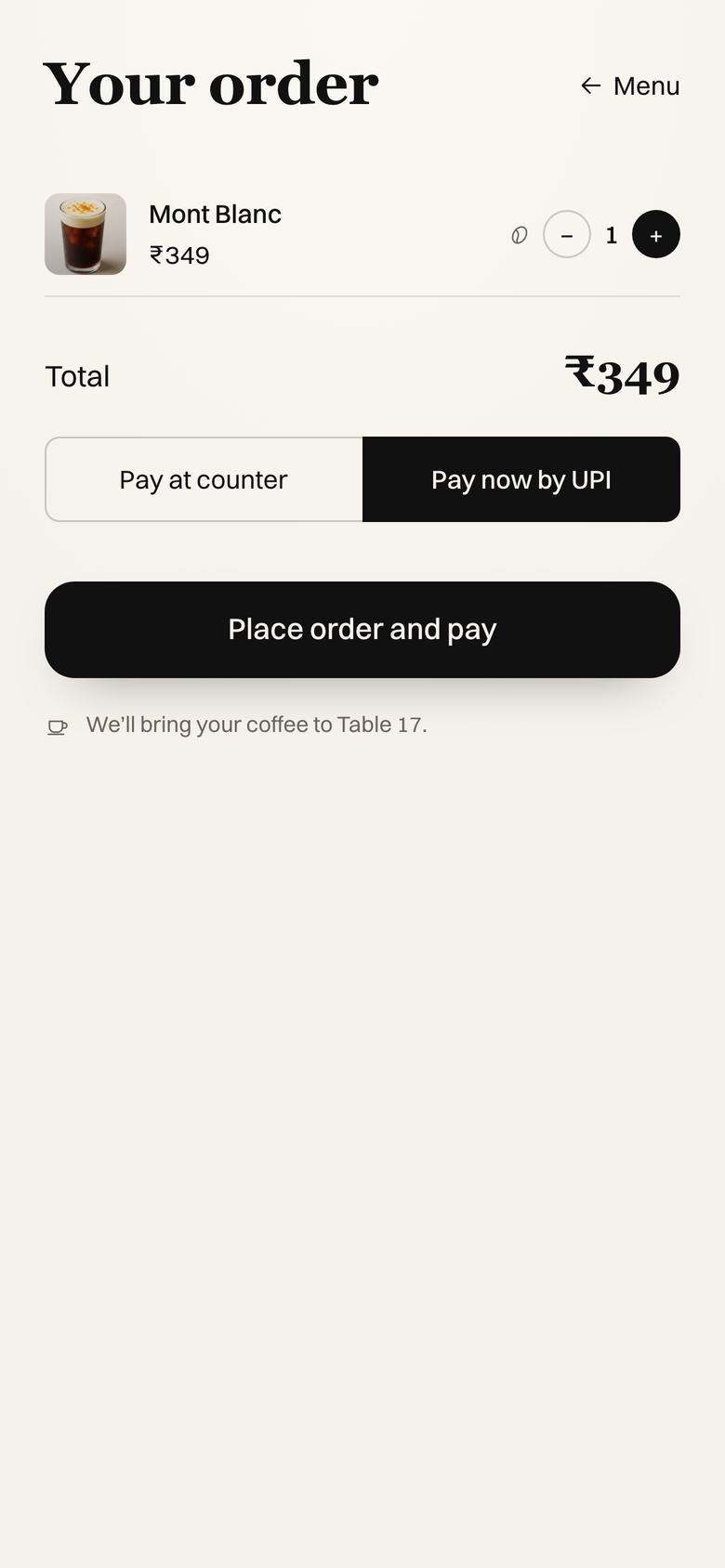
One screen behind the bar. Orders land on it the second a guest presses send.
New, on the bar, at the table. Your team moves a ticket with one tap and the guest watches it move on their own phone from their seat. Nobody has to come and ask how long it will be.
Mark a drink sold out and it greys out on every table instantly. Message a guest on WhatsApp on the number they already gave you. Runs on any phone, tablet or laptop you already own.
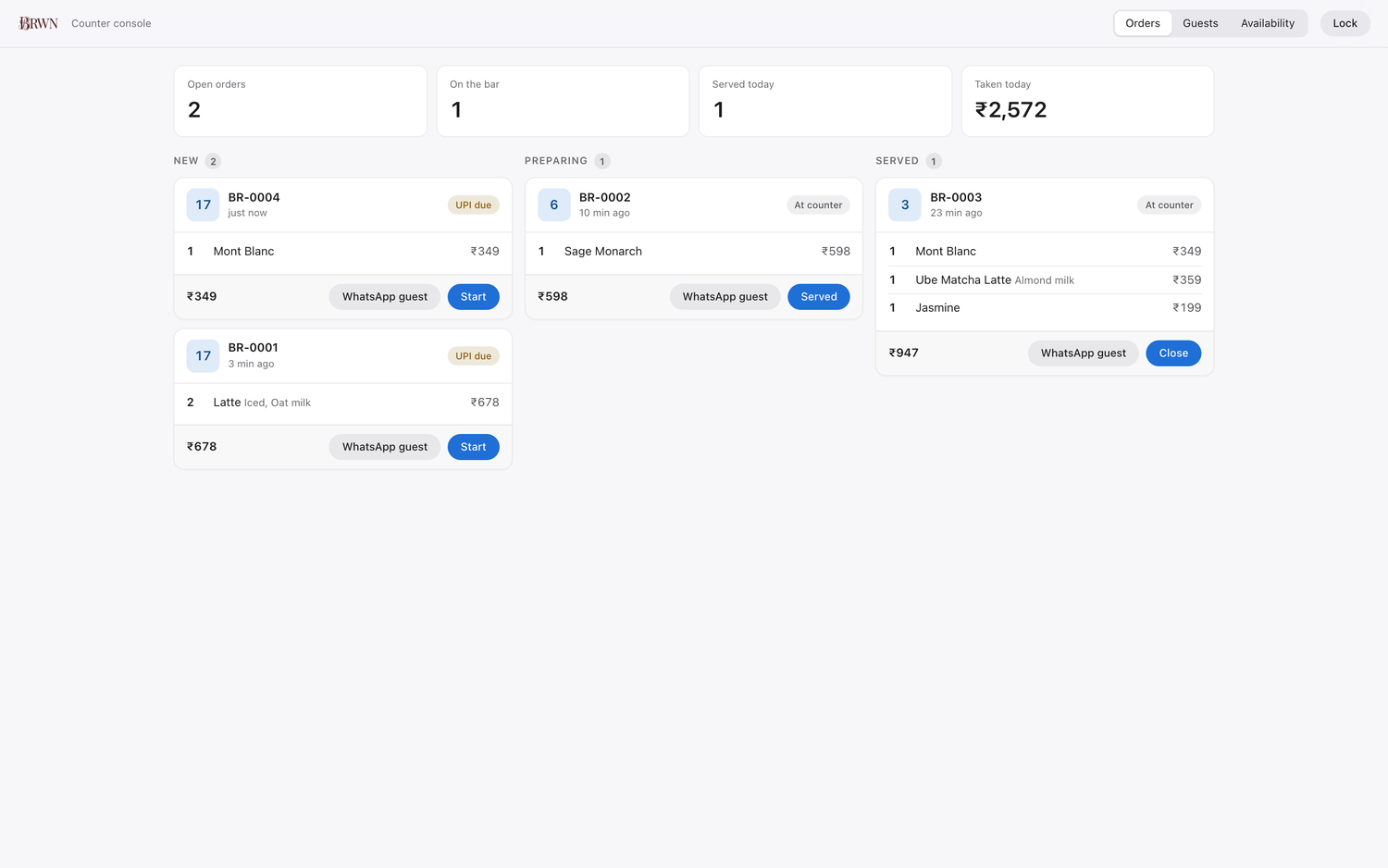
There is no monthly software bill and no per-order cut, because the whole thing is built to avoid both.
So there is no surprise later.
A web page cannot switch WiFi on by itself. That lives in your router. What you are looking at works standalone right now: the guest gets the network name and password, the menu, ordering and payment.
The day your access point is pointed at this same address, the WiFi becomes properly gated behind it, and nothing here has to be rebuilt. Same page, same sticker.
The SMS gateway for the code is the other switch. Right now the demo shows the code on screen so you can walk the whole flow yourself.